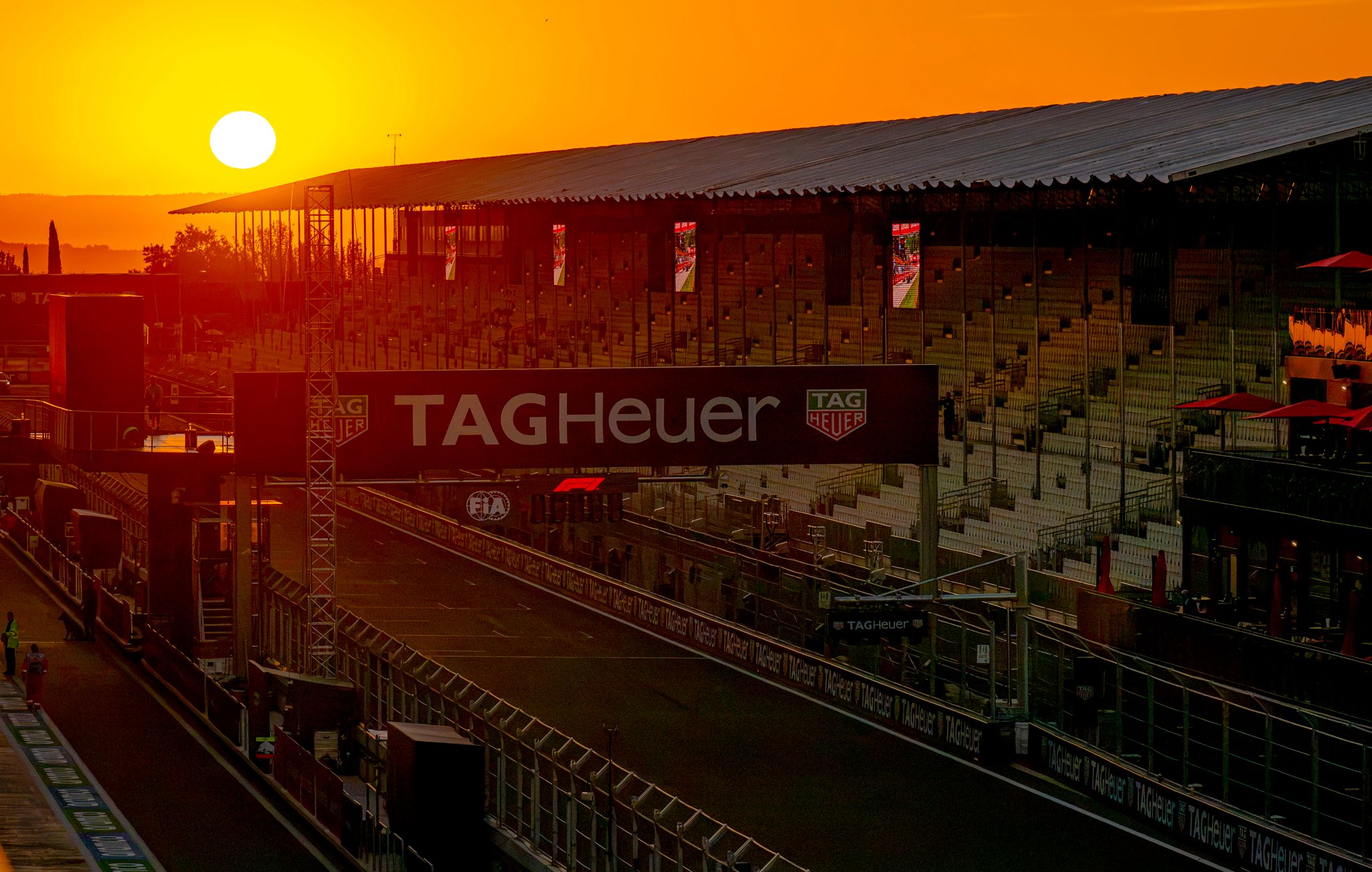
Oh, my goodness, the anticipation was huge. Come on, I am a Madrid granddaughter, a Madridista, and an F1 enthusiast. What could possibly be a better combination? For weeks, I had been looking forward to seeing Madrid back on the Formula 1 calendar. The city had not hosted a Grand Prix in 45 years, and this was supposed to be something special: a brand-new circuit, a home race for Madrid, and the return of Formula 1 to a city I love.
Perhaps that is why the name caught my attention even before the cars touched the track. Madring, a combination of Madrid and “ring,” was designed to be short, global, easy to pronounce, and easy to recognise on a screen. It was meant to have the simplicity of names like Monza or Silverstone, names that have become almost synonymous with Formula 1. Yet almost immediately, people began questioning it. What exactly does Madring mean? It does not really mean anything in Spanish, and somehow it sounds a little strange in English too. It is a small thing, almost funny, but looking back, it feels strangely appropriate because Madring seemed to promise a lot.
The new circuit was built around Madrid’s IFEMA exhibition centre, with a mix of street sections and permanent track. Much of the attention was on La Monumental, the banked corner that was expected to become its signature. Drivers who experienced the circuit beforehand described it as surprisingly wide and flowing, while 19 red flags during a Formula 3 test suggested that it could be more challenging than it looked. With Madrid returning to Formula 1 after 45 years, expectations were understandably high.
Then the actual race happened, and much of that anticipation disappeared.
The race was largely a procession. Max Verstappen had already warned after qualifying that there were virtually no places to overtake. Lando Norris questioned parts of the circuit design, while Fernando Alonso felt that even La Monumental demanded less from the current cars than many had expected. Suddenly, the circuit that had been talked about for weeks seemed to have very little to say once the race was underway.
And that was what stayed with me. Not simply that Madrid had produced a disappointing race, because circuits can be changed, cars evolve, and a new track does not have to be perfect on its first attempt. What interested me was the gap between what we imagine something will be and what it eventually becomes.
Before the weekend, Madring existed mostly as an idea. Madrid was returning to Formula 1. There would be speed, spectacle, a new circuit, and a corner everyone would be talking about. We had already created a version of the experience in our minds before we had even seen the cars race there. Then reality arrived, and reality is rarely as carefully designed as anticipation.
Maybe we do this more often than we realise. We build things up in our minds before we ever experience them. We do it with places, people, films, careers, relationships, and even the versions of ourselves we hope to become. Sometimes reality exceeds what we imagined. Other times, it simply reminds us that an idea and the thing itself are not always the same.
For me, perhaps that was the real disappointment. I wanted Madrid to have a circuit that felt unmistakably Madrid. I wanted something with its own character and identity, something that did not simply exist in Madrid but felt as though it belonged there. Perhaps that cannot be created overnight. A circuit needs time to develop its own history, its own memories, its own mistakes and adjustments, and the moments that eventually become part of how people remember it.
So, I am willing to give Madring another chance. After all, Madrid has never needed much help creating spectacle. Maybe the track just needs a little more time to find its own rhythm.
Image courtesy of Madring


