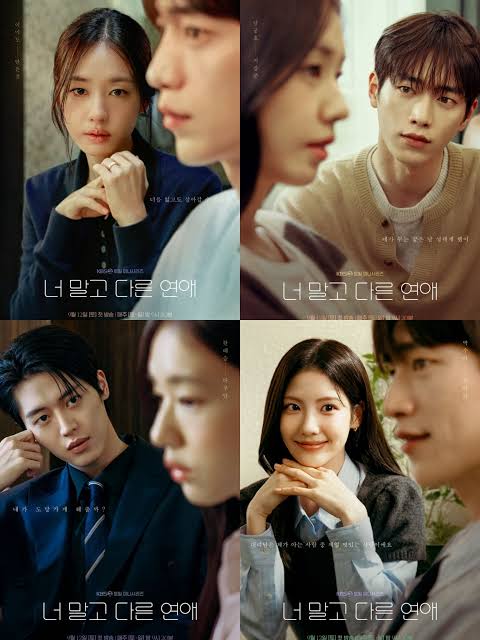
Written by Lim Hye-jin & Directed by Park Joon-hwa
Developed by Studio Dragon
Romantic comedies often walk a delicate line between heartfelt and formulaic. For me, this drama leans gently toward the latter, despite flickers of genuine promise. It begins with a familiar foundation, the enduring enemies to lovers dynamic. Childhood sweethearts turned reluctant rivals, the leads are bound by a generational family feud, a premise rich with emotional possibility, yet one that never fully comes into its own.
While the narrative gestures toward simmering conflict and eventual reconciliation, the emotional spark often feels restrained. Moments that seem poised to open into vulnerability instead unfold with a quiet sense of obligation. Their interactions carry tension, but it rarely deepens into something transformative. Whether this stems from limited character development, uneven chemistry, or a hesitance to push beyond convention, the romance feels more functional than affecting. It has its charm, certainly, but the emotional resonance never quite settles, making it difficult to fully invest in their journey.
As expected from Studio Dragon, the production is polished and visually compelling, with a refined aesthetic that lends the series an effortless elegance. Yet even this signature craftsmanship cannot entirely lift the story beyond familiar terrain. I continue to admire Ju Ji-hoon, whose presence and range left a lasting impression in Kingdom. Here, he remains grounded and sincere, bringing quiet credibility to his role, though the material does not always give him the space to fully shine. Love Your Enemy, for all its visual grace and thematic promise, remains closely tethered to well-worn narrative paths.
That said, the drama reveals unexpected depth in its quieter moments. Beneath the surface of its romance lies a gentle, reflective current, one that considers the weight of societal expectations placed on South Korea’s youth. Academic pressure, mental health, family duty, and the interruptions of military service are woven thoughtfully into the story. These elements never feel overstated, yet they add a quiet gravity that lingers. In these instances, the series feels most grounded, offering something more enduring than its central romance alone.
To its credit, the show does not turn away from these realities. Instead, it integrates them with a quiet sensitivity, allowing them to shape the emotional landscape without overwhelming it. There is a sense of restraint here that works in its favor, suggesting an awareness of the unspoken burdens many carry and the quiet resilience required to move forward.
In the end, while the series does not redefine its genre, it offers an earnest reflection on love, family, and the inner lives we often keep hidden. Those drawn to the enemies to lovers dynamic, or to romantic dramas that explore life’s subtler emotional textures, may find much to appreciate. For me, it was a journey marked by grace and restraint, beautifully rendered, though ultimately more familiar than unforgettable.
Image courtesy of tvN