Written by Lee Seung-young and Ahn Hye-song | Directed by Jung Ji-woo
Production companies: Movierock and Cine Forest
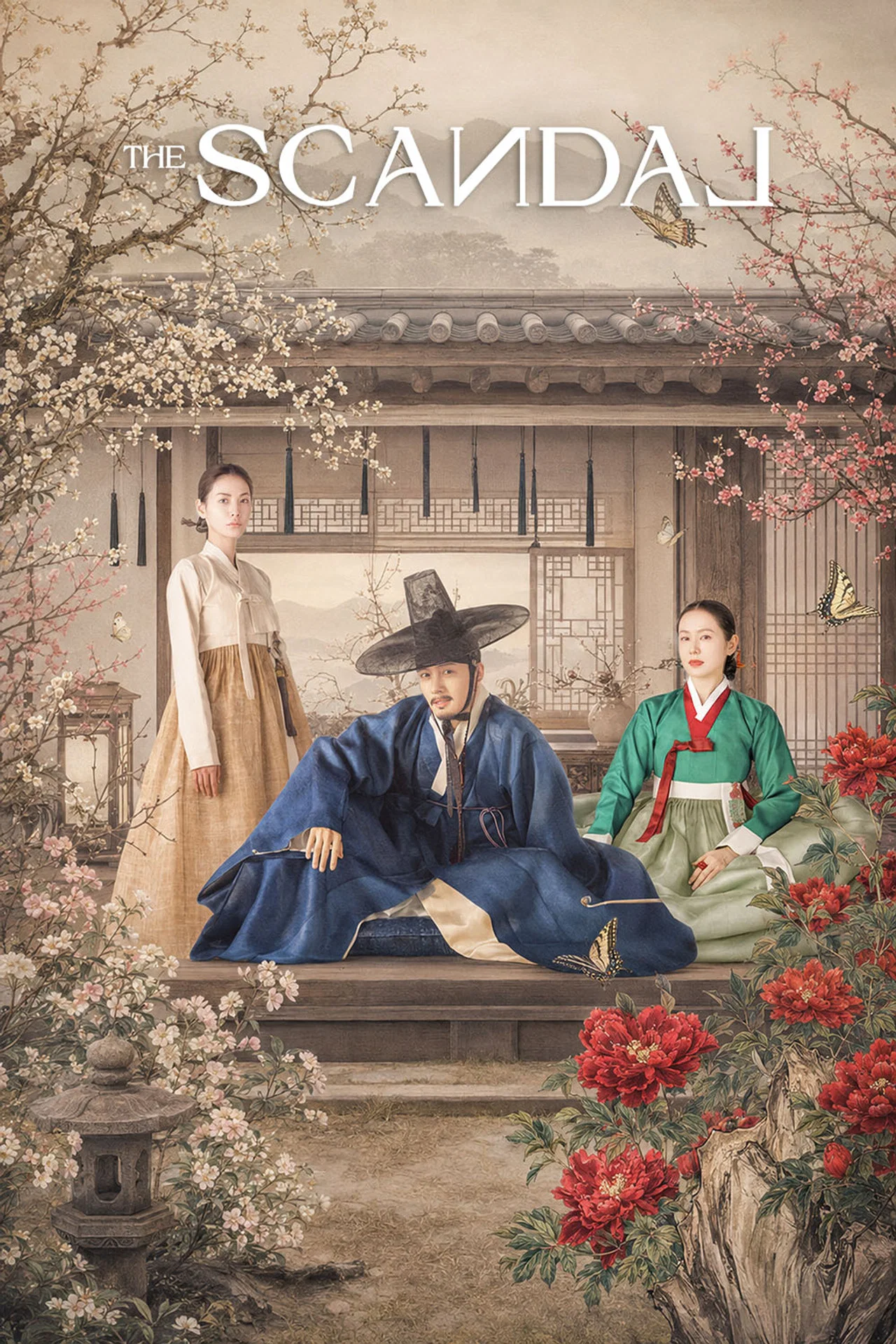
The production draws inspiration from Pierre Choderlos de Laclos’s French novel Les Liaisons dangereuses, The Scandal reimagines the story in the Joseon dynasty.
Who are we when we stop playing the roles everyone else has written for us?
I am still trying to find the words for what I felt watching this. Some stories end, and you simply move on. Others leave you sitting in silence, feeling as though something has passed through you and left you slightly changed. You finish them, yet you are not quite ready to return to ordinary life. You need a little time to find your way back.
The Scandal was that kind of experience for me.
What an extraordinary piece of storytelling. There is so much happening beneath the surface, often in the smallest details. A gesture, a pause, a look, a silence, a choice that seems almost insignificant until suddenly it is not. Everything feels carefully held, almost painfully so, as if the story were a knot being pulled tighter and tighter. You feel the tension accumulating, and at some point you realize you have been holding your breath along with it, waiting for something to finally give.
Which brings me to the scene in which a ribbon tied in a bow beneath a character’s chin is pulled tight, and they claw desperately to loosen it. For me, this is the production’s most powerful metaphor. There is something deeply unsettling about watching the struggle to breathe become so visible, as though everything that has been quietly tightening around the characters were suddenly made tangible.
Jung Ji-woo’s direction, Lee Tae-yoon’s cinematography, and the performances of Son Ye-jin, Ji Chang-wook, and Nana work in such quiet harmony that the production never needs to announce its craft. Light and shadow, framing and movement, the stillness of a face or a sudden shift in expression all deepen what remains unspoken. The performances, in particular, stay with me. Each actor carries contradiction with remarkable precision, allowing tenderness and cruelty, desire and fear to exist side by side. Nothing feels forced. Everything feels lived.
At first, the story appears to be about seduction, desire, jealousy, betrayal, and the dangerous games people play with one another. Yet beneath these shifting relationships, I found something much more painful: the struggle to understand who we are beneath the expectations that shape us.
Family, gender, class, reputation. These forces can become so deeply attached to us that it is hard to know where the role ends and the person begins. We spend so much time learning what we are supposed to want that eventually we mistake those expectations for our own desires. Even when we begin to question them, we may discover that the voices of those who came before us have become part of our own.
That is where the production became personal for me. Not because I recognized myself in any one particular character, but because I recognized something of myself in all of them. The desire to be seen. To be loved without having to perform for it. To belong without surrendering a part of ourselves in exchange. To make a choice that feels entirely our own, even when we are not completely sure what that choice should be.
What moved me most was the way the story refuses to make its characters easy to understand. There is tenderness alongside cruelty, desire alongside fear, vulnerability alongside manipulation. We are allowed to understand a choice without agreeing with it, and to feel compassion for someone who has caused pain. The story leaves room for contradiction, and perhaps that is what makes it feel so deeply human.
Because we are contradictory too. We can love and hurt at the same time. We can spend years trying to live a life that makes sense to everyone around us, only to wonder whether it ever made sense to us.
I finished The Scandal with the feeling of having witnessed something beautiful and devastating. It left me thinking about the expectations we inherit, the parts of ourselves we conceal to be accepted, and the quiet courage it takes to question a life we may have spent years learning how to perform.
I am still trying to understand why it affected me this deeply.
Image courtesy of Netflix