I have been writing this piece about loneliness for a long time, in fragments, returning to it whenever a thought surfaced, often in moments when I felt its weight most deeply. Each time, I felt I was writing around it rather than about it. There was something I wanted to understand, and I could not quite reach it.
It was a Korean drama that brought me closer.
I have watched more than four hundred of them by now, and they have long been more to me than entertainment. I look to these stories for answers, or perhaps for better questions. Sometimes a story offers me a way into something in my own life that I have not yet found the words for.
A Love Other Than Yours follows a couple ten years into their relationship. Without giving anything away, I can say this much: the hardest part of a long relationship is not always choosing between two people. Sometimes it is discovering who you have become inside the life you have spent years trying to protect. I expected a story about relationships. It became, for me, a story about loneliness, though not the kind I had anticipated.
It left me wondering not only about the characters on screen, but about the quieter questions that can settle inside a long relationship, and eventually inside oneself. The series is still airing, but I couldn’t stop writing. I found myself trying to make sense of something I could not quite put into words.
Are we seeing the person in front of us as they are today, or are we holding on to the person they were, the one we remember, and the future we once imagined together?
Then I wondered whether I was doing the same thing to myself.
We tend to think of loneliness as absence: an empty house, a quiet evening, no one to call. But I’m comfortable with those things. I love silence. It has always been important to me. So what happens when your life is full of people and you still feel lonely? When someone beside you knows your history and has built a life with you, yet there are parts of yourself you don’t know how to share, or simply don’t want to?
Sometimes, it is as simple as this. You have an idea, a feeling, something you’ve been turning over in your mind all day, and finally you decide to share it. You want some feedback, someone to engage with it, to say, “Hey, I’m here.” And then, in the middle of it all, you remember the donkey in Shrek. Sorry, I wandered off…
Sometimes, though, the other person isn’t really listening. The familiarity of ordinary days can dull our attention to one another, until the things we most want to say quietly stop being said.
Nothing dramatic has to happen for this kind of loneliness to arrive. Nobody has to leave. You can be content with the life you have and still sense the presence of something you cannot quite name.
And this is the hardest part to say aloud: how do you explain it without making it sound as though what you have is not enough?
I’m not saying that what we have is not enough. I’m saying that even in our closest relationships, parts of us can remain unheard. We are taught to notice what is missing and be grateful for what is present, as though the two cannot exist side by side, as though acknowledging an absence diminishes everything that is there. But we are more complicated than that. We can be grateful and restless at once. We can share our lives with people we have known for decades and still wonder about the people we have not met, the conversations we have never had, and the versions of ourselves we might discover somewhere unfamiliar.
Perhaps I do want a different life. Or perhaps I want to know that the life I have is not the only one I could imagine.
Over the years, a relationship becomes intertwined with other things: fear, obligation, guilt, and the quiet expectations we build around one another. We can mistake being needed for being valued. Sometimes, we spend so much effort keeping a relationship together that we forget to ask whether we are still growing within it.
And sometimes we begin to wonder who we might have become under different circumstances. What might we have discovered? Which conversations might we have had, which interests might we have pursued, and which parts of ourselves might we have got to know?
I find myself curious about that person, and about what else life could hold.
We come to know ourselves through the roles we occupy, the responsibilities we carry, and the routines that gradually become our lives. We grow familiar to ourselves. We know what makes us happy, what irritates us, what we are good at, what we have learned to tolerate. And yet I sometimes wonder how much of who we are depends on the circumstances in which we live. How much of our personality is simply the version of us that learned to function within a particular life?
Would I think differently if I were surrounded by different questions? Would I discover interests I don’t yet know I could have? Would I recognize myself?
I don’t know. That is what makes me curious.
If I try to name what I long for, I think it begins with conversation.
I miss conversations that leave me thinking long after they have ended. Conversations about things I care about, subjects that make me curious, ideas I hadn’t considered before. I miss being drawn into a subject, wanting to know more, discovering a perspective that makes me reconsider something I thought I understood. It isn’t necessarily about having profound conversations. It’s about finding someone who makes me curious, and being able to do the same for them.
There is a particular pleasure in discovering you were wrong, or that an idea you never took seriously has suddenly become interesting. I like the possibility of being challenged, of encountering a thought that unsettles my own and finding myself wanting to know more.
Maybe this is why I am so curious about the people we have yet to meet. Not because they will understand us better than those who already know us, but because they might encounter us differently. They might ask questions nobody has asked, notice something we have overlooked, or challenge an idea we have never thought to question. They might show us something about ourselves that we hadn’t noticed before.
Of course, there is a danger in imagining this. It is easy to turn an unknown person into the keeper of every possibility we feel is missing from our lives, to imagine that somewhere someone is waiting to have the conversation that will change everything.
Real people are rarely so convenient. They arrive with their own limitations, histories, disappointments, and expectations. They may surprise us, but not always in the ways we hope. And there is no guarantee that meeting someone new will make us feel less alone. Sometimes another person can make us feel lonelier still.
Still, I keep returning to the question. What do we long for when we imagine these encounters? Is it the other person, or the possibility of being someone slightly different in their presence?
Maybe it is impossible to separate the two.
We are shaped by the people we meet, the places we inhabit, the stories we watch, and the moments that make us see something differently, even when we aren’t quite ready to. Some people leave our lives without ever knowing that a brief encounter with them mattered. We have only one life, lived within particular circumstances, among particular people, making choices that open some doors and quietly close others. Even when we choose well, there are other lives we will never know.
I suspect we become more aware of this as the years pass. We grow more familiar with ourselves, or at least with the person we have learned to be, and yet the more we know, the more we realize how much remains beyond our experience. I don’t find that entirely sad. There is still so much I haven’t thought about, so many people whose lives could show me something I have always taken for granted in an entirely new light.
But curiosity can be a lonely thing, too.
You can want to explore without knowing where to begin. You can look at the life you have and wonder about the life that is still possible, with no clear sense of how the two might coexist.
And perhaps the hardest part is that nobody can tell you what you are missing. If you knew, you could name it, look for it, make room for it, or decide you did not want it after all. But how do you look for something you cannot yet imagine?
I have been thinking of loneliness as a kind of longing. Longing usually suggests we know what we want, something in memory or imagination we hope to recover. But what if we long for something we have never known? A life we cannot picture, a version of ourselves we would not yet recognize?
Maybe that is what I have been trying to write about all along.
Not the loneliness of having no one around, but the loneliness of knowing there is still so much you might become, without knowing where those possibilities belong in the life you are already living.
I don’t know whether this is a new kind of longing, or simply one we don’t talk about enough. I don’t know whether it comes from the lives we have built, the people we have become, or the awareness that time keeps moving whether or not we have finished discovering ourselves.
I only know that I am still curious.
And sometimes I wonder what to do with that.
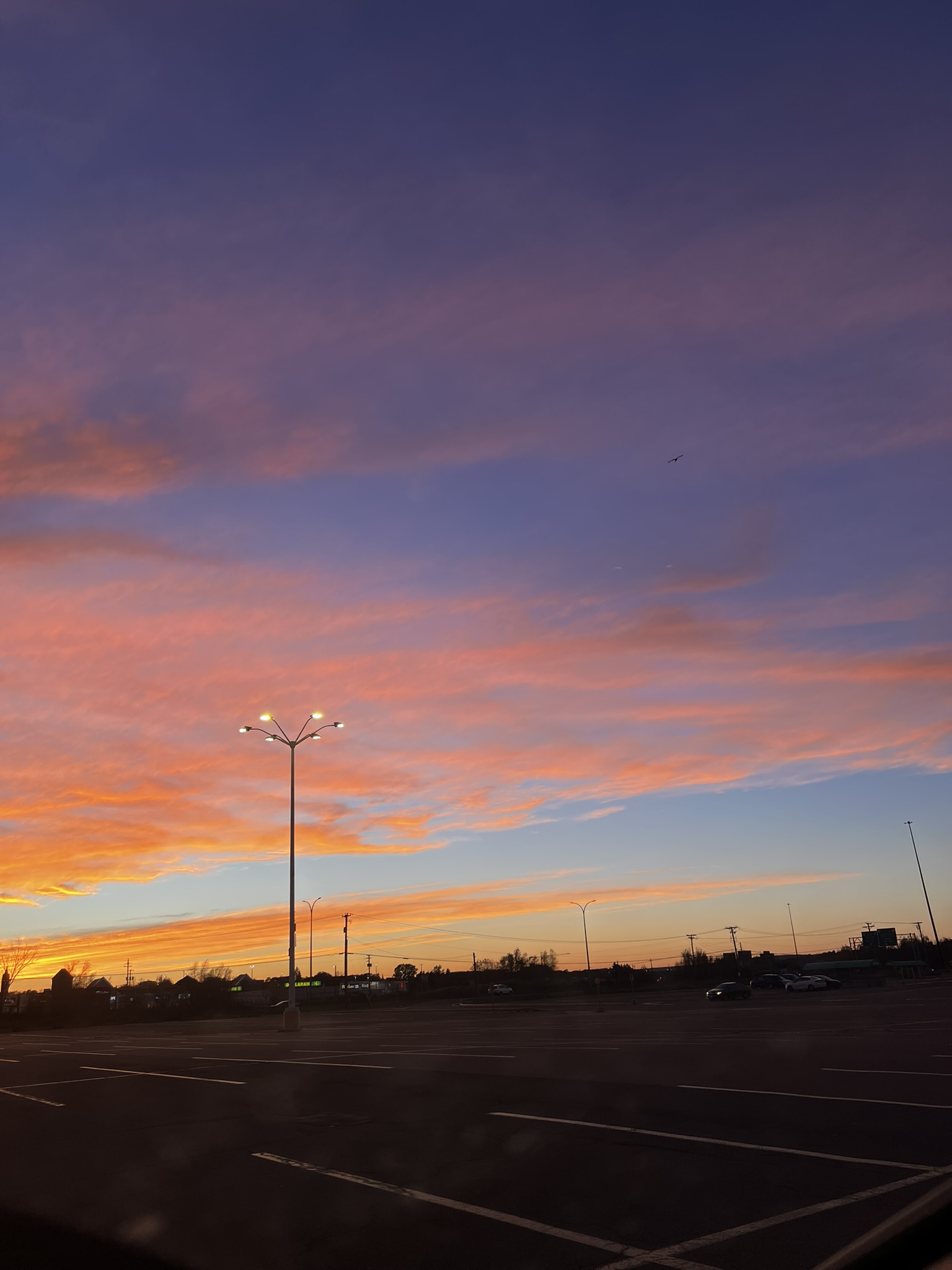
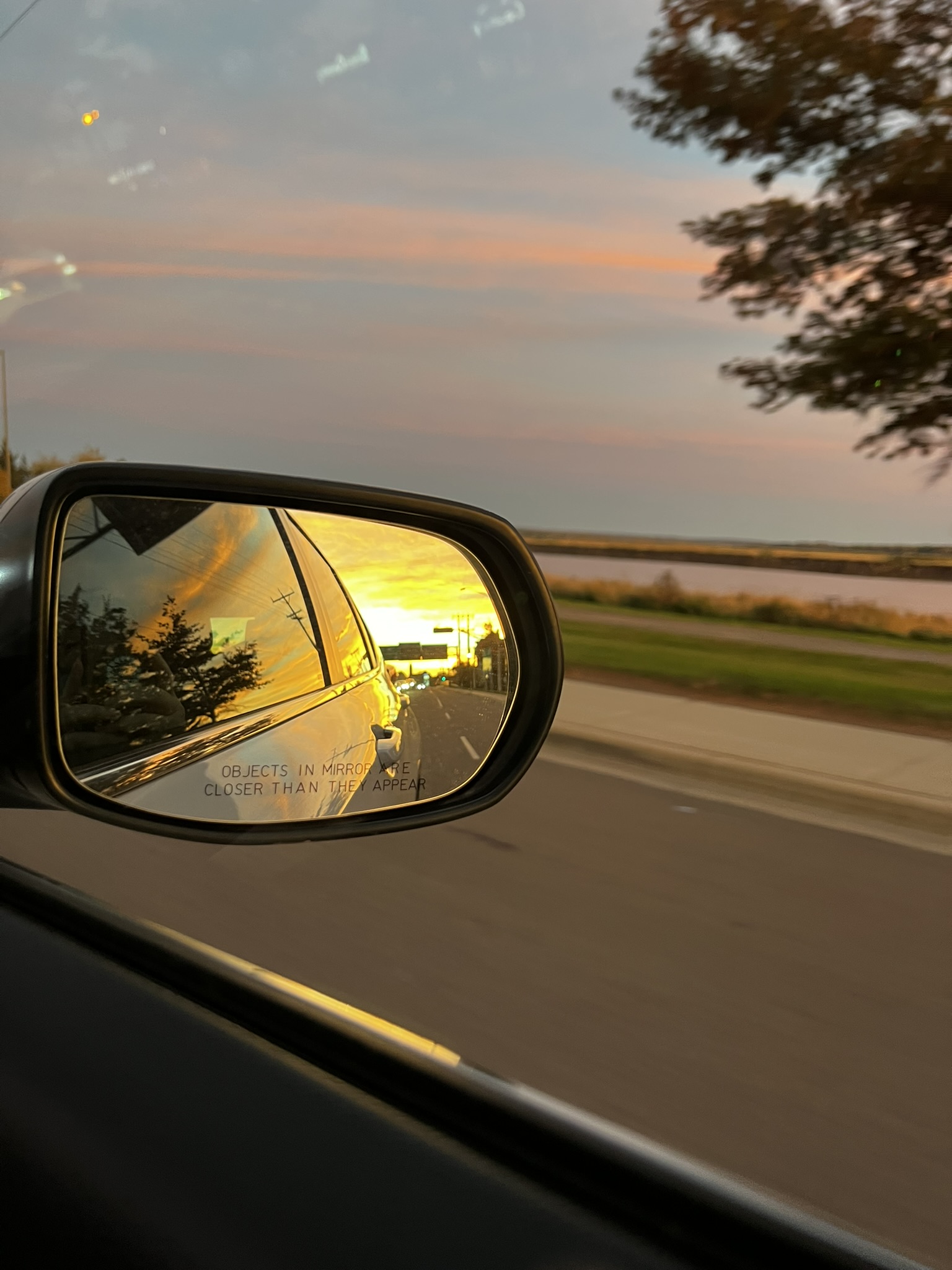
Image: Personal archive, Dieppe, New Brunswick, 2026.