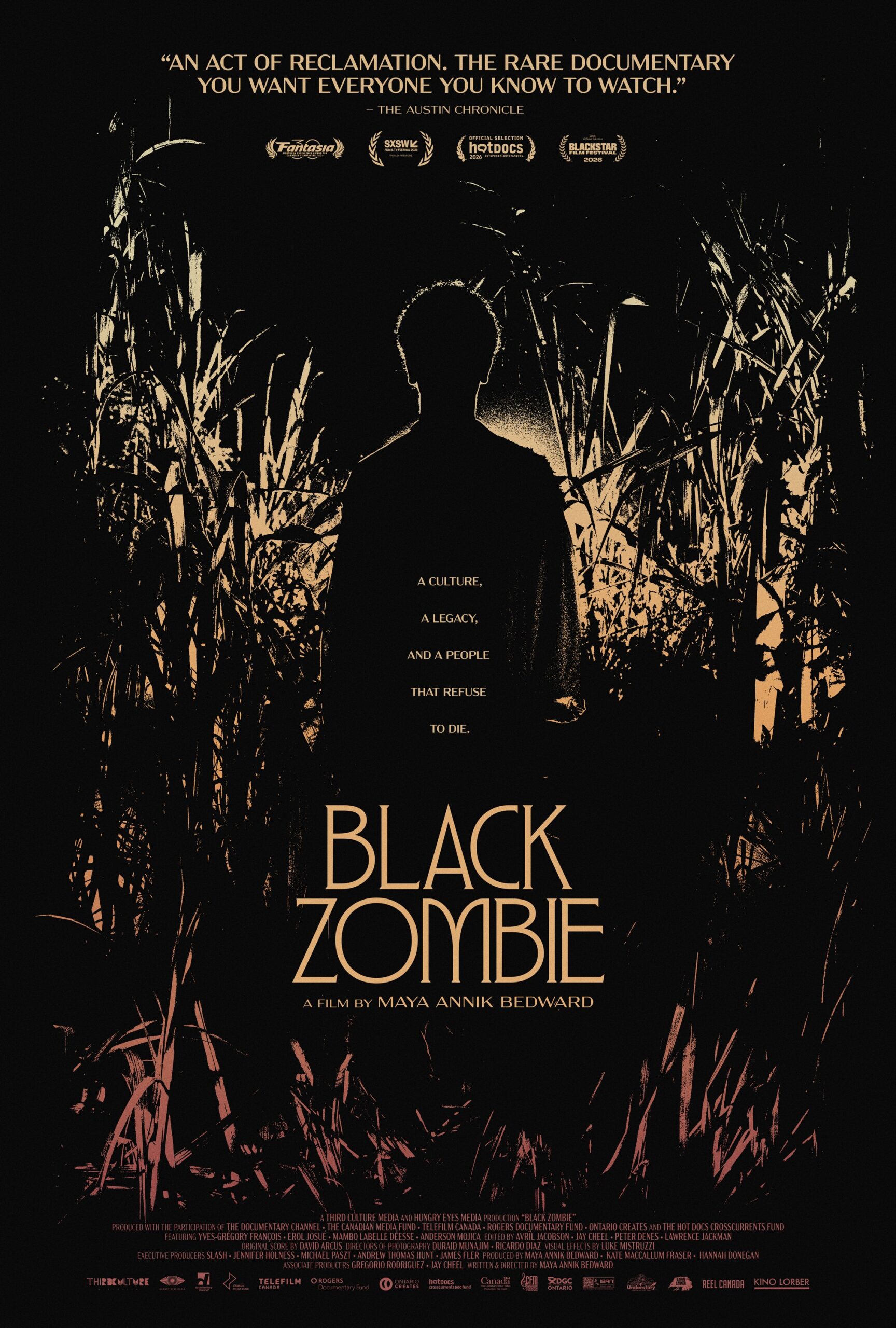
Directed by Maya Annik Bedward · 2026
What if the monster we have learned to fear is actually the victim of a story told by those who took away its freedom?
Who has the power to define another culture’s stories, and what happens when their version becomes the one the world believes?
I usually like to write about the things I love. It’s one of the things I want this platform to make room for, and this documentary belongs here. What an interesting piece for us, so-called filmmakers, to learn from about the craft.
I’ve been thinking about it since the Lunenburg festival, where I had the pleasure of watching it somewhere between a hundred thousand meetings, of course. So many things are stirring in me that they could probably start as a list.
The first is the importance of investigating the story beneath the story. A familiar subject can hide a much deeper history, and the creative opportunity lies in discovering what audiences think they already know, then revealing what they have never been asked to consider.
There is also the relationship between form and content. What I find interesting about Maya’s approach is how her curiosity about the connection between the zombie and Haitian Vodou led her into a much larger investigation of history, spirituality, and the ways Black stories have been transformed by popular culture. She takes something we think we know and asks us to look at it again, this time through the history and cultural context that popular representations have often left behind.
The film brings together archival footage, horror film excerpts, interviews, and more stylized visual sequences to explore that history. I like the idea of using cinema to question cinema itself, revisiting familiar images to uncover what they leave out. The very medium that helped turn a cultural figure into a monster becomes a way to recover the history behind it. Cinema can carry a distortion, but it can also expose it, and maybe even heal it.
Then there is the question of who has the authority to tell a story. Research alone is not enough when a film touches a community’s spiritual beliefs and historical wounds. Listening to the people who carry that knowledge, respecting their agency, and questioning our own place as filmmakers are all part of the work.
And finally, we should never reduce a person to what they represent. No one should have to carry an entire culture or community on their shoulders for the audience. Their experience matters in its own right, even when it reveals something larger about history or society.
These lessons feel especially close to documentaries about identity and belonging, where we have to balance the personal story with the wider social context. Just me, thinking about my Crossing Borders project. Well, anyway…
In the end, Black Zombie is about more than the history of a monster. It is about storytelling, power, memory, and humanity, and how they live inside one another.
The film made me think about how easily a story can be separated from its origins, how entertainment can quietly normalize a distortion, and how difficult it can be for a community to reclaim the meaning of something the world believes it already understands.
For me, the question the film leaves behind is the one I started with:
What if the monster we have learned to fear is actually the victim of a story told by those who took away its freedom?
That question reaches far beyond horror. It asks me to look again at the stories I have inherited about other people, especially those whose voices were left out of the telling. And it goes beyond Haiti, too. When a culture is repeatedly told through the voices of outsiders who misunderstand or exploit it, those versions can become louder than the culture’s own voice.
Maybe that is the gentlest and most important reminder for those of us who make documentaries: sometimes the meaningful work is not only bringing a forgotten story to light, but asking how it became invisible in the first place.
Image courtesy of Wikimedia


